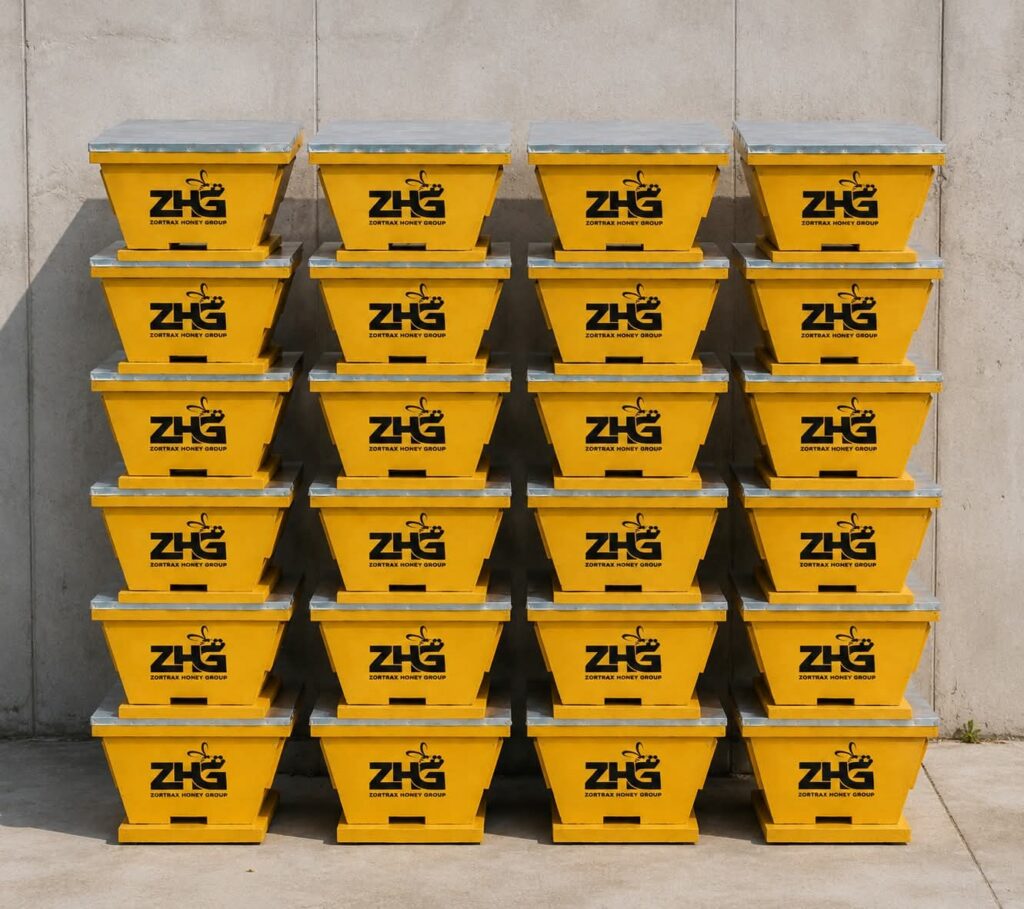
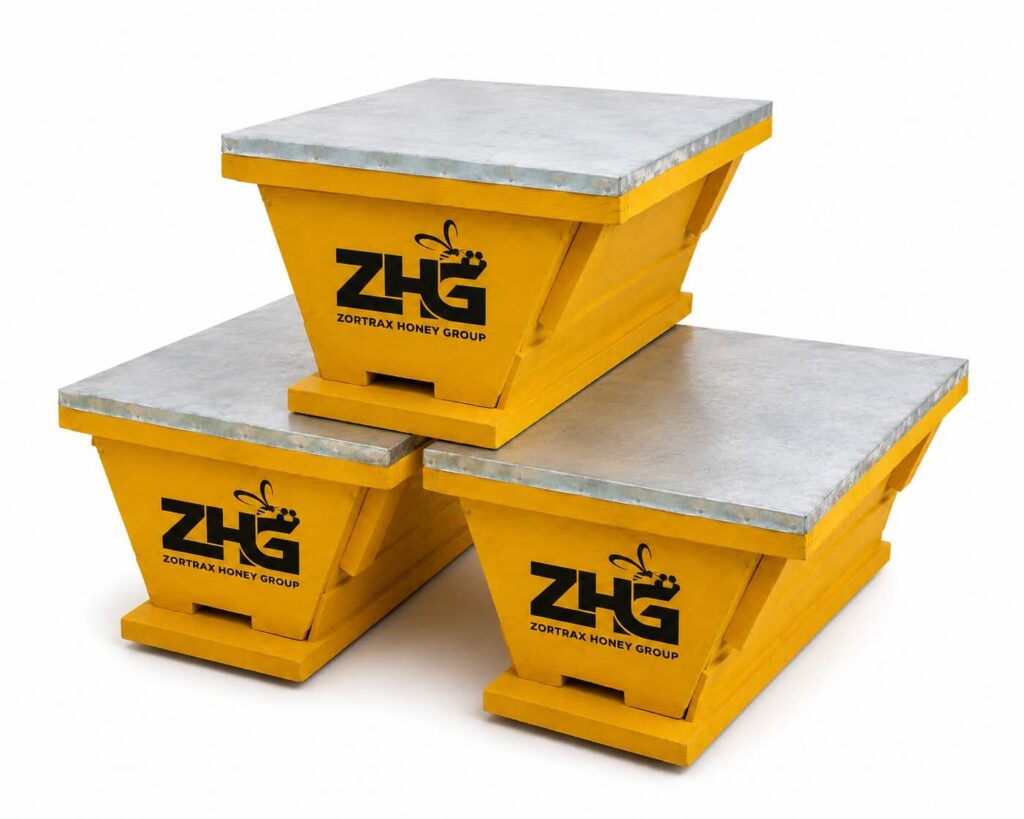
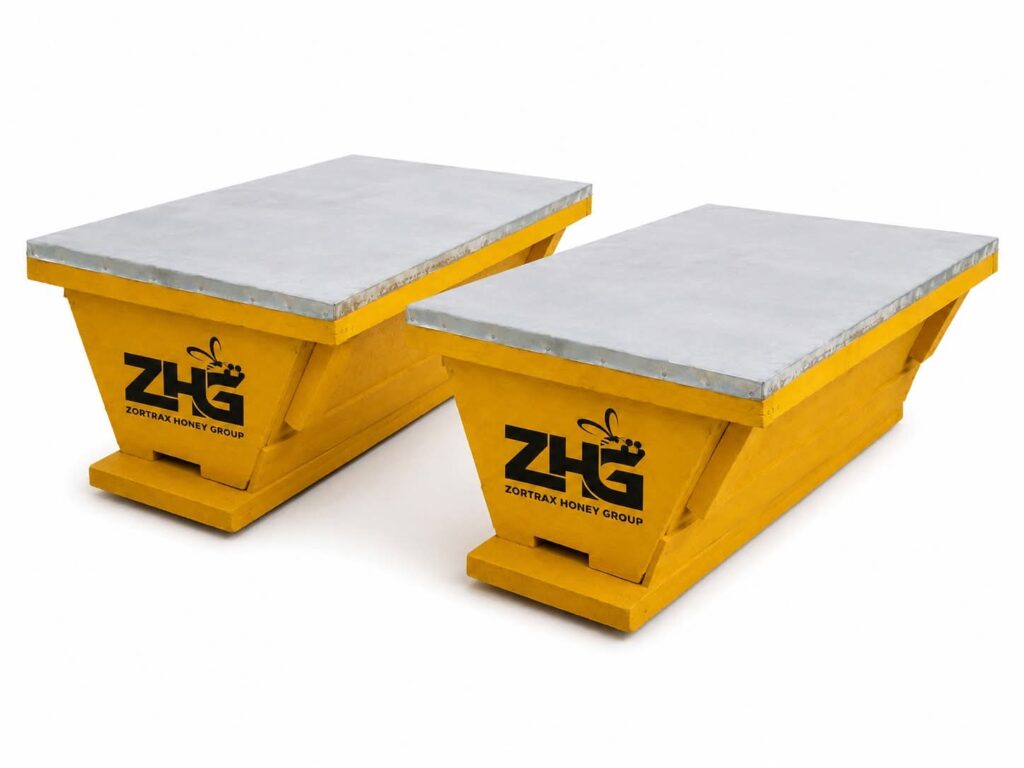
A Top Bar Hive (TBH) is a horizontal beehive that uses top bars instead of stacked boxes and frames like the Langstroth hive. Bees build comb downward from the top bars naturally, and TBHs are popular where low-cost, low-maintenance beekeeping is desired.
TBHs are widely used in Kenya because they are:
Simple to build and maintain
Low cost
Easy to inspect and harvest
Suitable for smallholder beekeepers
They are also used by commercial producers who want natural comb honey.
Placement of Top Bar Hives
For productivity and bee health, place Top Bar Hives where:
There is good nectar flow from flowers and crops
Access to clean water is available
There is morning sunlight and partial shade in hot conditions
The area is sheltered from strong winds
Hives are raised 0.5–1 m off the ground to improve ventilation and deter pests
In Kenya, common placements include:
Near flowering crops
Around orchards
Edges of forests
Near homesteads with protective fencing
Honey Production Per Year (Kenya Conditions)
Honey yields depend on forage, climate, and management:
Typical range: 10 – 25 kg per hive per year
With excellent forage and strong colonies: up to 30 kg
Drier or forage-poor areas: 5 – 10 kg
Yield is usually lower than well-managed Langstroth hives, but Top Bar Hives are easier to build and maintain without expensive equipment.
Advantages of Top Bar Hives
Lower initial cost
Natural comb suitable for artisan markets
Simple to build locally using available timber
Easy inspection without heavy lifting
Suitable for beekeeping training and community projects
Limitations
Lower honey yield compared to commercial Langstroth systems
Comb is usually destroyed during harvest unless special frames are used