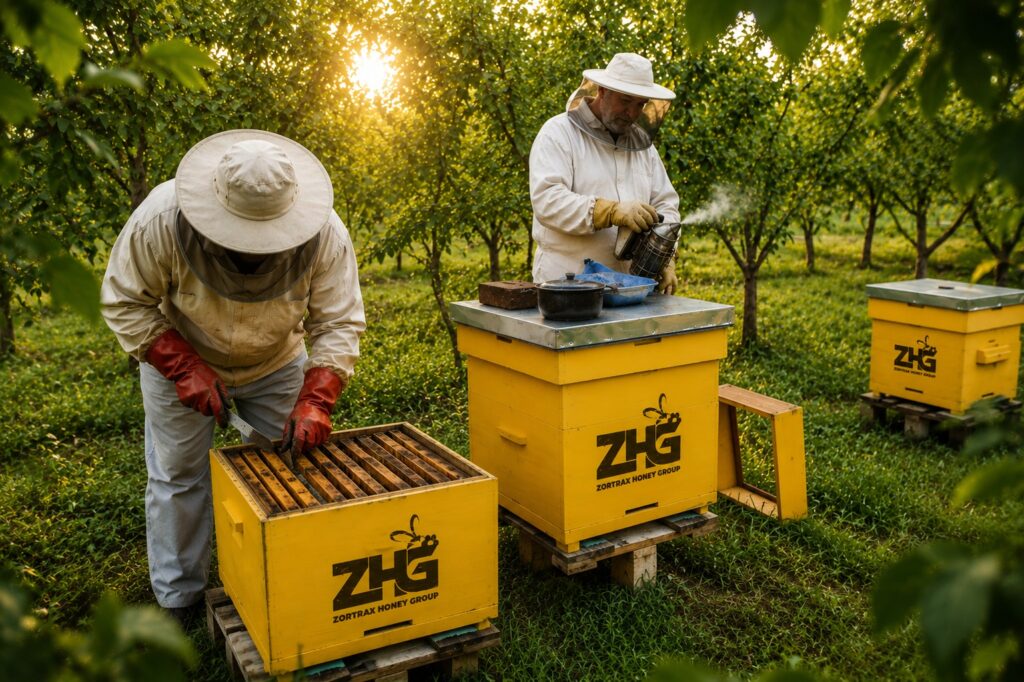
A box hive is a rectangular wooden beehive with fixed or semi-movable frames/bars inside. It sits between a traditional log hive and a modern Langstroth hive in terms of cost, management, and productivity.
Box hives are popular in Kenya because they are:
Affordable
Easy to construct locally
Better than log hives for inspection
Suitable for rural and community apiaries
Placement of Box Hives
For good production, Box Hives should be placed:
Near flowering plants and crops
Close to access to clean water
In areas with morning sun and afternoon shade
Raised 0.5 – 1 m off the ground
Protected from strong winds and flooding
Away from heavy human and livestock movement
Common Kenyan placements include:
Farm boundaries
Orchard edges
Forest margins
Homestead apiaries
Lorem ipsum dolor sit amet, consectetur adipiscing elit. Ut elit tellus, luctus nec ullamcorper mattis, pulvinar dapibus leo.
Honey Production Per Year
Yield depends on forage, weather, and management:
Average: 10 – 20 kg per hive per year
Good conditions: 20 – 25 kg
Dry or poor forage areas: 5 – 10 kg
Box Hives usually produce less honey than Langstroth hives but more than traditional log hives.