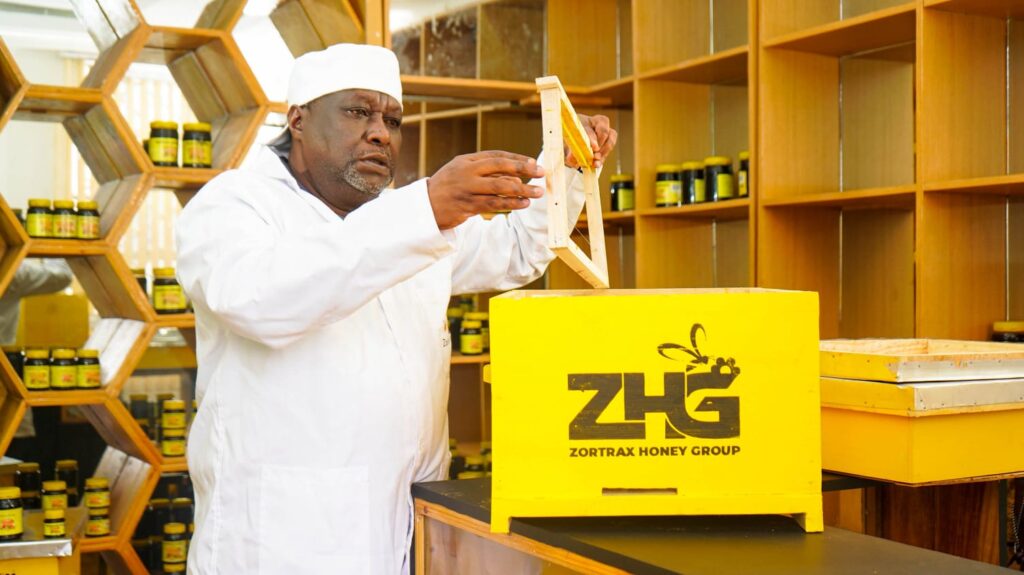
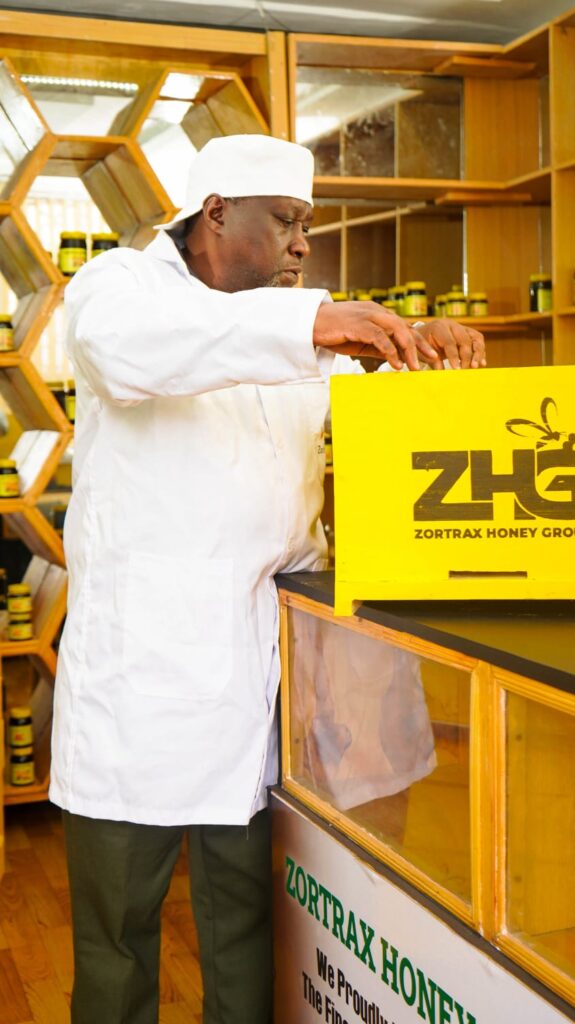
The Langstroth beehive is the world’s most widely used modern hive. It uses removable frames spaced according to “bee space,” allowing easy inspection, honey harvesting, colony management, and higher productivity compared to traditional hives.
Placement of Langstroth Hive
For maximum productivity:
Area with abundant flowering plants and crops
Access to clean water within 500m
Morning sun and afternoon shade
Protected from strong winds
Raised 0.5 – 1m off the ground
Away from heavy human or livestock traffic
Not flood-prone
At Zortrax Farms, hives are often placed near:
Fruit orchards
Forest edges
Sunflower, acacia, coffee, macadamia, and pasture zones
Honey Production Per Year (Kenya Conditions)
Yield depends on forage, climate, and management:
Average: 20 – 30 kg per hive per year
Good management: 30 – 40 kg
Excellent sites: 40+ kg
Dry or poor forage areas: 10 – 15 kg
Zortrax-managed Langstroth hives typically target approximately 30 kg per hive annually under structured management and good forage availability.